
It began with an unexpected phone call from the downtown Sioux Falls library. A librarian had received an inquiry from a researcher on the East Coast looking for information about a long-dead Sioux Falls attorney: my great-grandfather, Joe Kirby. Knowing I had become the family’s unofficial historian, she wondered whether I would like to speak with him. I certainly did.
The caller was Thomas Healy, a professor at Seton Hall Law School. He was researching a book about Supreme Court Justice Oliver Wendell Holmes Jr. and the evolution of free speech in America. While examining Holmes’s private papers, released decades after his death, Healy had stumbled across an unpublished Supreme Court case that historians didn’t even know existed. My great-grandfather was the lawyer for the South Dakota defendants.
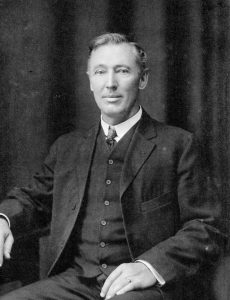
Sioux Falls attorney Joe Kirby in about 1917
That came as a surprise, although perhaps it shouldn’t have. Joe Kirby was one of South Dakota’s leading trial and appeals attorneys during the early twentieth century. He argued hundreds of cases before the South Dakota Supreme Court and several before the United States Supreme Court. What I didn’t know was that one of those cases almost changed constitutional history. I thought I had heard about his most interesting cases, but apparently not this one.
A Case Born in Wartime
In 1917, the United States entered World War I. Congress responded by passing the Espionage Act, making it a crime to interfere with the draft or undermine the nation’s war effort. The law immediately collided with the First Amendment.
Among the first people prosecuted were thirty German-American farmers from Hutchinson County, South Dakota. They had signed an awkwardly written petition asking Governor Peter Norbeck to seek changes in the nation’s draft laws. Many objected to the prospect of their sons fighting relatives in Germany.
Whether their petition was wise is beside the point. The federal government charged them under the new Espionage Act, secured convictions, and sent them to prison at Leavenworth. Joe Kirby was called in to appeal their case to the United States Supreme Court.
His central argument was remarkably simple. However misguided the petition might have been, citizens have a constitutional right to petition their government. The government could not criminalize that right simply because it disliked the message.
Behind Closed Doors
After oral arguments, the justices met in private to vote. The government appeared headed for victory. One justice was assigned to write the majority opinion affirming the convictions. But the decision was not unanimous. Justice Oliver Wendell Holmes Jr. disagreed. He wrote a dissent arguing that the farmers’ petition was protected by the Constitution. Two other justices, including the Chief Justice, joined him.
According to Professor Healy, “what occurred next is one of the strangest episodes in Supreme Court history.”
Someone inside the Court leaked word of Holmes’s dissent to federal prosecutors. That should never have happened. Supreme Court deliberations are among the most closely guarded confidences in American government. Nevertheless, they did it.
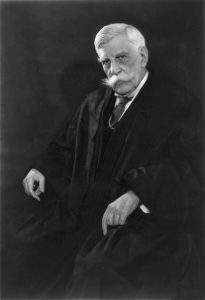
Supreme Court Justice Oliver Wendell Holmes, Jr.
The Justice Department immediately recognized the danger. Holmes’s reasoning could undermine future prosecutions under the Espionage Act, many involving defendants whose conduct was far more threatening than a poorly worded petition from South Dakota farmers.
Rather than risk creating an unfavorable Supreme Court precedent, federal prosecutors did something virtually unheard of. They confessed error. In effect, they abandoned the case before the Court issued its decision.
The convictions disappeared. The farmers went back to Hutchinson County. Joe Kirby returned to his law practice in Sioux Falls. The Supreme Court never issued an opinion.
A Lost Chapter of Constitutional History
For decades, no one outside the Court knew any of this had happened. The draft opinion and Holmes’s dissent remained buried among his private papers until they were released many years later near the end of the 20th century. By then, legal history had occurred.
Shortly after the South Dakota case was dropped, Holmes wrote his famous opinions in the landmark Espionage Act cases of Schenck, Debs, and Abrams, opinions that shaped modern First Amendment law and established him as one of the nation’s most influential constitutional thinkers.
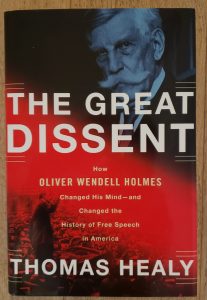
Healy’s book
The forgotten South Dakota case reveals that Holmes had begun developing those ideas even earlier than scholars realized. Professor Healy tells this remarkable story in his book, The Great Dissent. I often wonder what my great-grandfather would have thought had he known how close his case came to becoming one of the great constitutional decisions in American history.
(Earlier version published four years ago).
Very interesting and fun to read. Thanks for sharing such important history.
Fascinating, interesting judicial history with local relevance. The Kirbys have a long lineage of pertinent legal history.
Regarding Supreme Court secrecy—My sister Beth was a clerk to Chief Justice Warren Burger early in her career, and was one of two who typed the final Watergate decision. For security, it was done overnight, to be released the next morning.
Yes we have a long lineage, but normally as defendants…
Really interesting stuff, and still has application today, thank you for sharing.
Joe,
This is fascinating. So good to know that your great grandfather spoke up and that Oliver Wendall Holmes sought to protect the first amendment Right of Petition. Very important!!
Fabulous Joe. Great information to know about your great grandfather! Our 1st amendment rights are the foundation that sets our republic above all others.
Not bad for an amateur historian…
I agree. It was an interesting turn of events.
Very interesting. Thank you for sharing
Great history, Joe.